

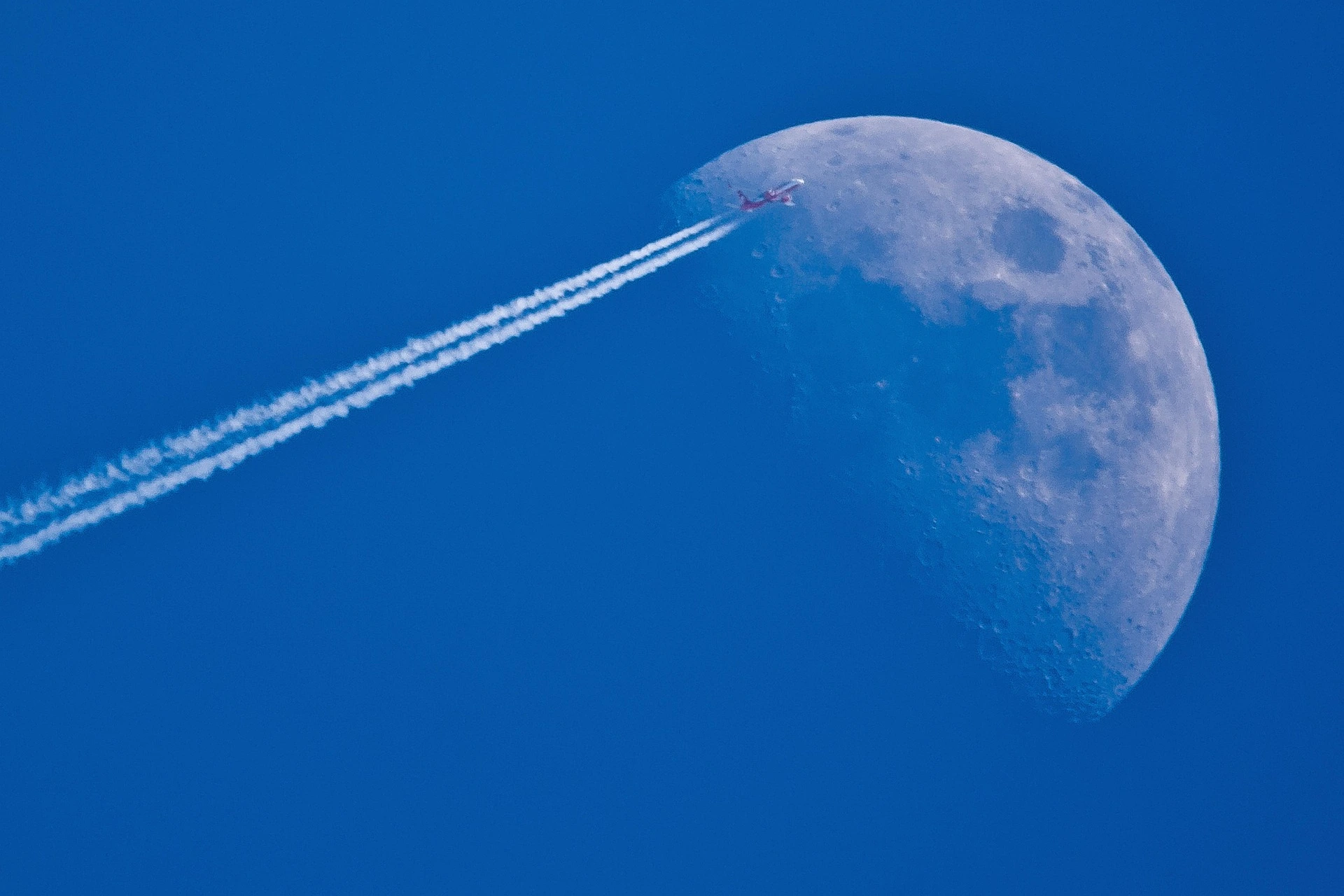
Have you seen long streaks of white, freshly painted lines in the air? Why do airplanes leave lines in the air?
What is the Science Behind Contrails
The white lines behind airplanes are condensation trails. They are not caused by the smoke from engines or caused from the engines of other planes. They are caused by the hot airplane exhaust and the cold atmosphere at high altitudes. Contrails are composed of and are essentially and are man-made cirrus and formed in the wake of outputs from planes.
The Construction of Contrails
The creation of contrails is a unique example of atmospheric physics. After a jet engine burns fuel, it releases exhaust gases that are hot and contain water vapor, which is a combustion byproduct. While flying at cruising altitude—over 8 kilometers in height, or over 26,000 feet—ambient air is extremely frigid at temperatures below 40 below zero.
It is a mixture of water vapor in jet engine exhaust and the extreme temperatures at high altitude that causes the creation of contrails. However, it’s not just temperature that plays a role. The engine exhaust contains impurities from the burned fuel, which include, among other things, soot and sulfur compounds. These particulates serve as cloud condensation nuclei, or the bases, for the growth of water droplets. The actual condensation and freezing of water vapor is what creates the tiny visible ice crystals that we see as contrails.

The condensation of water vapor at speed occurs at 500 miles per hour, which is quite faster than the speed at which a person can exhale. The breath of the person is a visible condensation of water vapor, which is why it’s similar. Changes in air pressure can also trigger contrail formation. These changes can occur in wingtip vortices or in the air over the entire surface of the wing.
Why Some Planes Leave Trails While Others Do Not
While enjoying some time outside and looking up at the sky, you may notice that not all planes are leaving contrails. Sometimes you just see a plane with a gray nose and the rest of the plane with no trail, but nearby another plane is leaving a long, persistent trail. Some of the reasons for this include:
Atmospheric Conditions: The Deciding Factor
There are just the right atmospheric temperature and humidity conditions relating to condensation. The air has to be cold but have some humidity. Specifically, contrails form in Ice Supersaturated Regions of the air, or ISSRs. These are areas of the atmosphere where there is more moisture if the air is just vapor, then there are not enough ice crystals to remain in equilibrium.
In order for there to be cirrus clouds and more plane shapes in the sky, there must be ISSRs. This is where the relative humidity is more than 100% with respect to ice. At cruising altitudes of commercial jets (~35000 feet), ice supersaturation is relatively common; however, this is true only 5-10% of the time.
Even natural cirrus clouds are formed without airplane influence because of these invisible pockets of humid air termed ice supersaturation regions. This is also why there are days when you can spot contrails even though there are planes flying at the same altitudes on different days.
Altitude Is Important
The upper troposphere is typically where the cold and humid conditions are and where the contrails are formed. This is where an airplane flies during cruising altitudes, accounting for 32000 to 42000 feet. Also, smaller aircraft that do not reach these altitudes will not produce contrails, simply because the air is not cold enough for the water vapor to freeze.
Engine and Aircraft Technologies
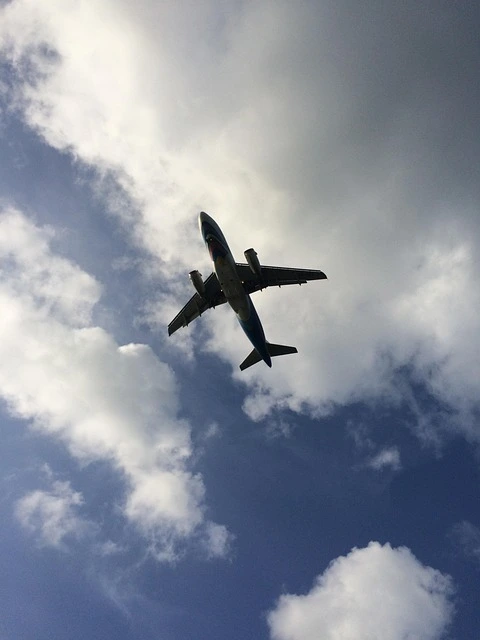
The modern engine of the airplane and the flying characteristics of the airplane will influence the formation of contrails. Newer aircraft, like the Airbus A350 and Boeing 787, that operate at altitudes greater than 38,000 feet, will produce more contrails than older aircraft. This is because these newer aircraft are more fuel-efficient and burn less fuel than the older aircraft. However, these new planes produce contrails that are less fuel-efficient because they use less fuel per mile.
Transitory vs. Sustained Contrails
Contrails do not all behave the same way. Scientists have developed three distinct categories:
Transient Contrails
Transient contrails appear as short white lines behind the plane and disappear as the aircraft flies past. These occur in relatively dry air, where the ice crystals evaporate in a matter of seconds to a few minutes.
Persistent Non-Expanding Contrails
These contrails are visible for long periods of time, yet they do not alter the shape of their line, staying linear for and entire several minutes to hours.
Persistent Expanding Contrails
These are the broad white lines, the most likely to impact the climate due to their longevity and widespread formation. These expanding contrails are persistent in high-humidity conditions, eventually turning into clouds over hours.
These clouds are called homomutatus and are named cirrus aviaticus if they look like cirrus, cirrocumulus, or cirrostratus.
The Start and Stop Phenomenon
An airplane is flying, and suddenly, contrails appear to start or stop abruptly. An airplane is entering or leaving an area of the atmosphere that has extra moisture or crossing an atmospheric weather system front or boundary. This explains the pattern of contrails formed, where one airplane is viewed as writing dashed lines across the sky.
The Climate Impact
While contrails appear harmless, there is a measurable and significant impact on the climate that scientists are concerned about.
The Warming Effect
Contrails have warming effects that add to the change of climate. This is as troubling as it is startling— the visible light trails in the sky are just as large contributors to global warming as burning jet fuel.
For a century, using the global warming potential metrics, the warming effect of contrails from one year of global aviation is estimated to be between 33 to 63 percent of the warming from the carbon dioxide emissions of the same year. However, with a 20-year time horizon, the warming effect of contrails would be 1.2 to 2.3 times greater than that of CO2.
Day vs. Night: When Contrails Are Most Damaging
The contrails formed at night and those that persist into the night pose the greatest damage to warming the atmosphere. This is because, during the day, contrails both trap heat that is radiated from the earth and reflect sunlight that comes from the sun. The net effect of these two processes is that there is only partial warming. However, at night, there is no sunlight from the sun that can be reflected. Contrails at night trap heat with no balancing effect, resulting in warming.
The carbon dioxide that comes from flying is cumulatively damaging over decades, while contrails are transient, only lasting a few hours. This means both carbon emissions and contrails are less permanent than CO2, but the contrails are immediately damaging to short-term warming.
Not every flight is of equal worth
Having observed pertinent data, researchers reached an important conclusion that only 2.7 percent of the world’s total flights (or 11 percent of the flights generating contrails) were responsible for 80 percent of the detrimental warming effects of contrails for the year 2019. Thus, concentrating efforts on a very small number of flights is likely to produce a positive change in the climate impact of aviation for the contrail-causing contrails.
Creative measures: The reduction of the impact of contrails
The warming effects of contrails are in the process of being studied, with the aviation sector affected, collating the following measures:
Adjustments to flight paths
Alterations to a flight’s altitude can be enough to circumvent regions that are ice supersaturated. One research estimate says that increasing fuel burn consumption to about 0.2% is a relatively small trade-off for the potential of 65% of warming effects caused by contrail formation to be avoided. Airlines already use this method of travelling around turbulence by routing flights to bypass challenging weather.
Accurate contrail prediction is the main obstacle. The ability of existing numerical weather prediction systems to constrain ISSR (Ice Supersaturated Regions) is not to the extent that they can be used for the real-world implementation of systems that avoid contrail formation. Attempts are being made to design better prediction systems. The problem with predicting areas that contain ISSR air at altitudes used by commercial aircraft is particularly pronounced.
Sustainable Aviation Fuel (SAF): Initial Investigation
Of great interest is the ability of sustainable aviation fuel to reduce both CO2 production and the formation of contrails.
Recent flights of the A350 using Jet A-1 fuel and SAF inaugurated the ability to show the economic impact of operating the A350 on flights to and from airports where sustainable aviation fuel was available (SAF) and to show the reduced climate impact of contrail ice crystals. Jet A-1 and SAF flights resulted in the formation of contrails for both flights. However, model simulations indicated that flights using only SAF yielded a 26% reduction in contrail formation and climate impact.
Research from NASA, BioFuel Canada, the German Aerospace Center DLR, and Canada’s National Research Council established that a reduction in the formation of contrails could directly be linked to the reduced availability of soot particles and ice nuclei.
The application of SAF to 100% of flights could reduce contrail warming by as much as 45%. Simulation-based estimates indicate that a 50% SAF (sustainable aviation fuel) blend on only 2% of flights could reduce contrail warming by as much as 10%.
From an operational point of view, the system works the same way, except that SAF is even more efficient, with even fewer soot particles being generated. Because there are fewer particles in the exhaust, the ice crystals that form are larger and heavier, causing contrails to sink out of the ice supersaturated regions more quickly and to evaporate more quickly.
MORE HUMIDITY SENSORS
For an accurate model to be generated, it is critical that the scarcity of humidity at cruising altitudes is tackled. There is a humidity sensor currently being designed to measure contrail-forming humidity, so that data obtained can be applied in retrofitted aircraft and used to enhance models designed for contrail prediction. With this, the data obtained will enhance real-time predictive capabilities and assist in contrail avoidance.
Aviation’s Overall Climate Impact
Aviation has a non-exhaustive, non-CO2 warming effect associated with it. The contrail cirrus formed from the atmosphere has a global annual mean radiative forcing of 3 times the CO2 that is emitted. More recently, it has been seen that the cumulative effect of the emitted CO2 has a radiative effect for which the estimations of non-CO2 warming of aviation have been revised downwards to contrail-induced warming. With it being an effective driver of warming, the aviation industry has actively been trying to promote the understanding of its warming effects and is exploring ways to minimize this as best as they can.
Geographical Differences
Geographical variation causes differing levels of impact caused by contrails. Geographically, contrails’ net radiative forcing is largest for Europe (876 mW/m²) and the USA (414 mW/m²,) while East Asia and China radiative forcing values, on the other hand, are near global averages due to the few flights in these regions that create persistent contrails which is a result of low cruising altitudes and limited ice supersaturation in the subtropical regions.
Response from the Aviation Industry
Generally acknowledged and accepted is the fact that contrails, though with diurnal, seasonal, and geographical changes, do have a net warming effect on the climate, though significant uncertainties remain in predicting the formation of an individual contrail as well as that of their impact on the climate, even with extensive studies having been performed.
The International Air Transport Association notes that the absence of high-resolution, real-time data on atmospheric conditions (especially humidity and temperature at cruising altitudes) is the reason for the lack of precise contrail predictions. Enhanced data collection and improved modeling are requests from the industry as a reason to refrain from introducing significant contrail avoidance actions.

Understanding the Difference Between Contrails and Chemtrails
There are misconceptions regarding contrails, and one of the more prominent ones is the idea that contrails have been purposefully made. Associated with this, a mass conspiracy theory has emerged, known as chemtrails, that nations are systematically dumping of aerosols and other chemicals into the atmosphere for nefarious purposes.
The conspiracy theory surrounding “chemtrails” asserts that the white streaks following air traffic are not water vapor and ice but rather components of a governmental plot to spray noxious chemicals into the atmosphere. This theory possesses no scientific credibility and is instead reinforced with the physical fact that contrails are comprised of condensed water vapor and ice that result from the combustion of jet fuel and are jet engine exhaust. With respect to the study of contrails and their components, the leading components (and their quantities) of jet engine exhaust (and no other components of fuel combustion exist) have been established. These components are water (H2O), and carbon dioxide (CO2) with trace other combustion byproducts.
Looking to the Future
Due to the predicted and estimated considerable increases in air traffic, the need to solve the contrail problem and develop science-based regulations for air traffic will become more pressing. Approximately 16% of the Earth’s surface is covered by atmospheric conditions that will allow for the persistence of contrails. Consequently, the extent of air traffic, persistence, and shape of contrails will likely form predictably. With respect to the developed mathematical models, the scientific parameters of air traffic and the persistence of contrails will become a critical issue that will need to be solved, predicted, and regulated.
Fortunately, some answers are starting to become available. The Intergovernmental Panel on Climate Change cites research estimating that contrail-induced cirrus clouds could be as financially damaging to the planet as the CO2 emissions from the entire aviation sector. However, there is some good news. Studies indicate that for some flights, the most damaging clouds to the planet could be avoided by moving the flight altitude down by around 2,000 to 3,000 feet. The number of flights that would need to be adjusted to a lower altitude in order to make a change to the cirrus cloud formation would be a small percentage of flights.
Emphasizing the Climate Problem
Those white lines stretching unevenly across the sky are visible representations of a challenging environmental problem. Contrails formed from burned fuel include the environmental problem caused by the plane, a visual representation of the environmental problem caused by the plane, and are part of a social problem representing the travel of many people across the world. However, there are many people from different disciplines working to solve this problem.
From the point of view of modern aviation, meteorology, and the climate crisis, these fine, white lines illustrate the complexity of the problems of our age. They are a reminder of the danger of the byproducts of our activities, however inconsequential they may seem. But they are also a reminder of something else: unlike the CO2 emissions from burning fossil fuels, the climate effects of contrails are rapid and short-lived, so the solutions we put into place today can bring climate gains in a matter of hours or days.
With air travel as a necessity of modern life, understood and properly managed contrails, along with their climatic consequences, are perhaps the most promising of the ‘quick win’ strategies to lessen the climate impact of air travel. It is also a strategy with a low implementation cost that would make a significant positive impact in the global battle to reduce climate change.
