

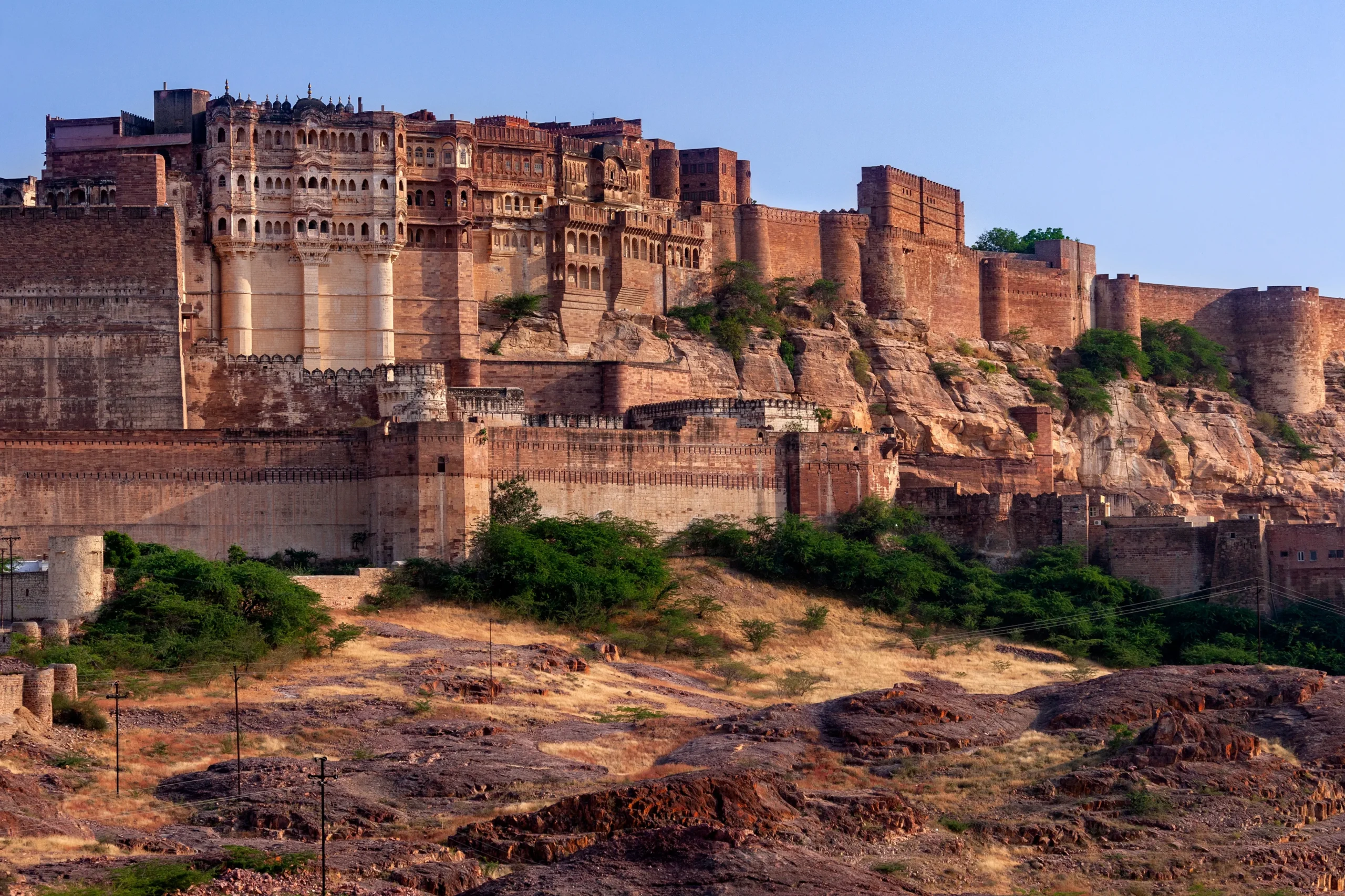
India is home to a wealth of cultural diversity, ancient history, and exceptional natural beauty. It is home to many World Heritage Sites that UNESCO has recognized. Architectural and engineering marvels, ancient cities, histories of religions and places of worship, and countries of nature showcase the memories of the past and aid in the many contributions of India that shaped and helped civilization grow. India has 44 UNESCO World Heritage Sites, including 36 cultural, 7 natural, and 1 mixed site. Those sites are located throughout the country, demonstrating a subset of India’s remarkable history and the myriad cultures that have influenced it. In the following paragraphs, we analyze 10 India UNESCO World Heritage Sites that are treasured and appreciated the world over.
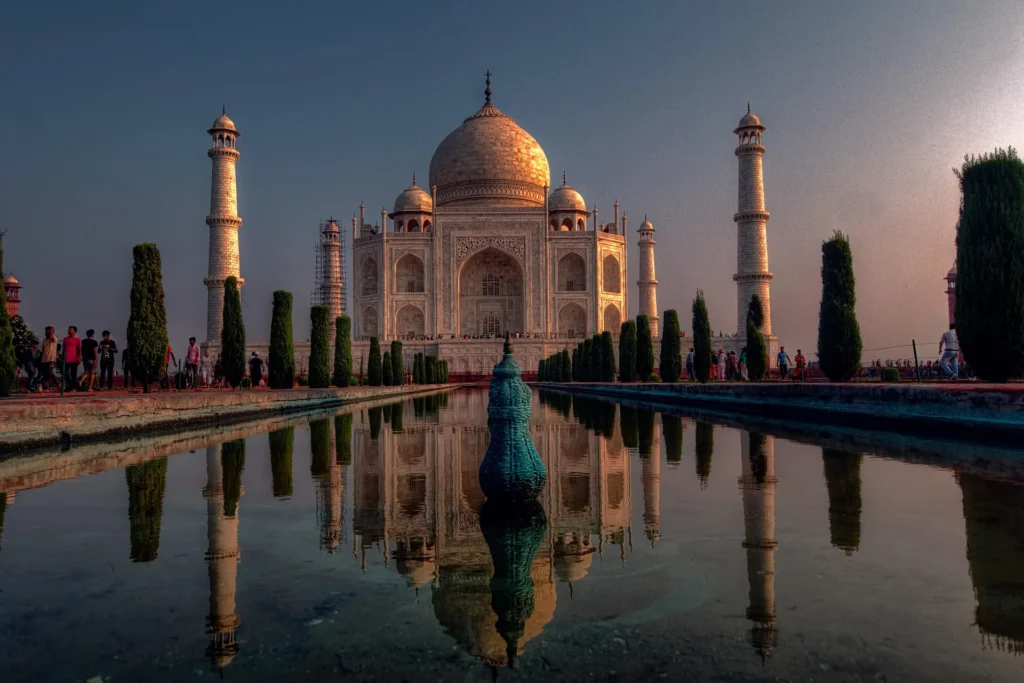
1. Taj Mahal, Agra (1983)
Everyone knows the Taj Mahal. It’s a big marble building that the whole world recognizes and is a symbol of love. It is a mausoleum built by the Mughal Emperor, Taj Mahal, for his favorite wife, Mumtaz Mahal, who died after childbirth. The building is a mix of many different styles, such as Persian, Turkish, Indian, and Mughal. The Taj Mahal is built with symmetrical reflecting pools and marble inlay work with semi-precious stones. Proportionate and harmonious, the marble inlay work and design make the Taj Mahal a piece of Mughal architecture. It’s a monument to Shah Jahan’s love for Mumtaz Mahal. The Taj Mahal is a big tourist site.
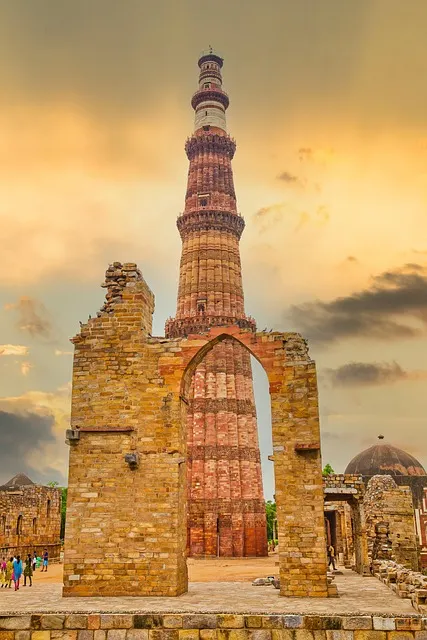
2. Qutub Minar, Delhi (1993)
The Qutub Minar is one of the most impressive monuments in the country. Built by the first Delhi Sultan, Qutb-ud-din Aibak, in the early 13th century, the Qutub Minar is regarded as the first tower of modern India. The tower is accompanied by the Quwwat-ul-Islam mosque, which is the first mosque in northern India. The complex is a symbol of the historical importance of Indo-Islamic Afghan architecture. Also, the tower is decorated with beautiful Arabic script inscriptions. Since the minaret is situated with a mosque, the complex is covered with a lovely historical garden. The Qutub Minar is the first tower of India. Qutub Minar is the first tower of India. Qutub Minar is the first tower of India.
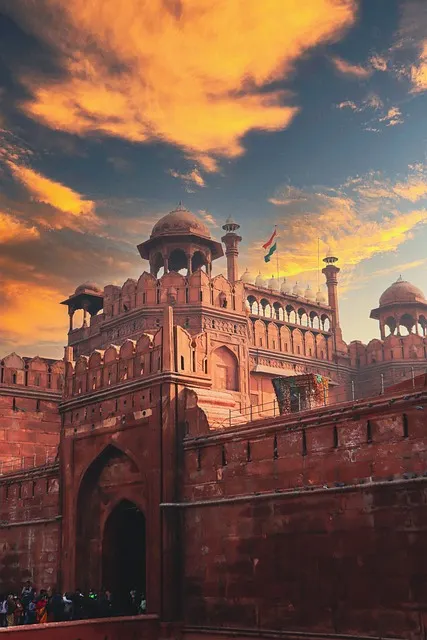
3. Red Fort Complex, Delhi (2007)
The Red Fort was opened to the public in 2007. It was built in the 17th century by Mughal Emperor Shah Jahan as the main residence for the Mughals for 200 years, under the colonial period until 1648. This fort is a unique piece of Mughal architecture; the immense walls, intricately designed marble structures, and beautifully cultivated gardens showcase the architecture of the period. The Red Fort also contains the fortable Shahi Mahal, and the Diwan-i-Khas and Diwan-i-Aam. This landmark is politically significant; the first battle of Indian independence in 1857 was fought here.
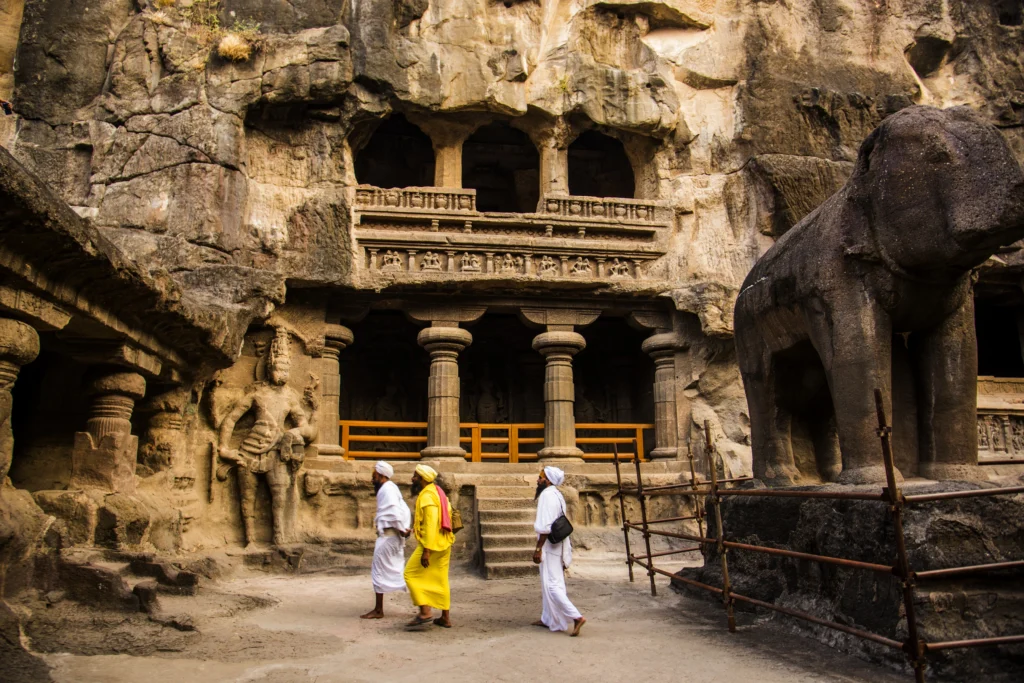
4. Ajanta and Ellora Caves, Maharashtra (1983)
Ajanta and Ellora caves are considered two of the finest rock-cut cave complexes in India. The Ajanta Caves, which are from the 2nd century BCE, are famous for their well-preserved, painted Buddhist murals illustrating the life of Buddha and later Jataka tales. These murals and sculptures are considered milestones of Indian art and are valuable records of the religion and culture of the period. The Ellora Caves, located 100 kilometers from Ajanta, consist of 34 caves which are an amalgamation of Buddhist, Hindu, and Jain religions. The Kailasa temple at Ellora is carved from one massive, monolithic rock and is one of the largest and most spectacular cave temples in the world. These caves are unique in their contribution to the understanding of the religion and art of ancient India.
5. Khajuraho Group of Monuments, Madhya Pradesh (1986)
Between the 9th and 12th centuries, the Chandela dynasty constructed the Khajuraho temples, a stunning collection of Hindu and Jain temples. Khajuraho’s exquisite erotic sculptures and intricate carvings are a testament to artistry and craftsmanship. Celebrating human sexuality and eroticism remains a dominant feature of Khajuraho to this day. Besides, the temples also depict diverse themes in human life, as well as the divine. The extraordinary architectural work that combines North and South Indian styles remains proof of the Chandela dynasty’s artistry, culture, and refinement.
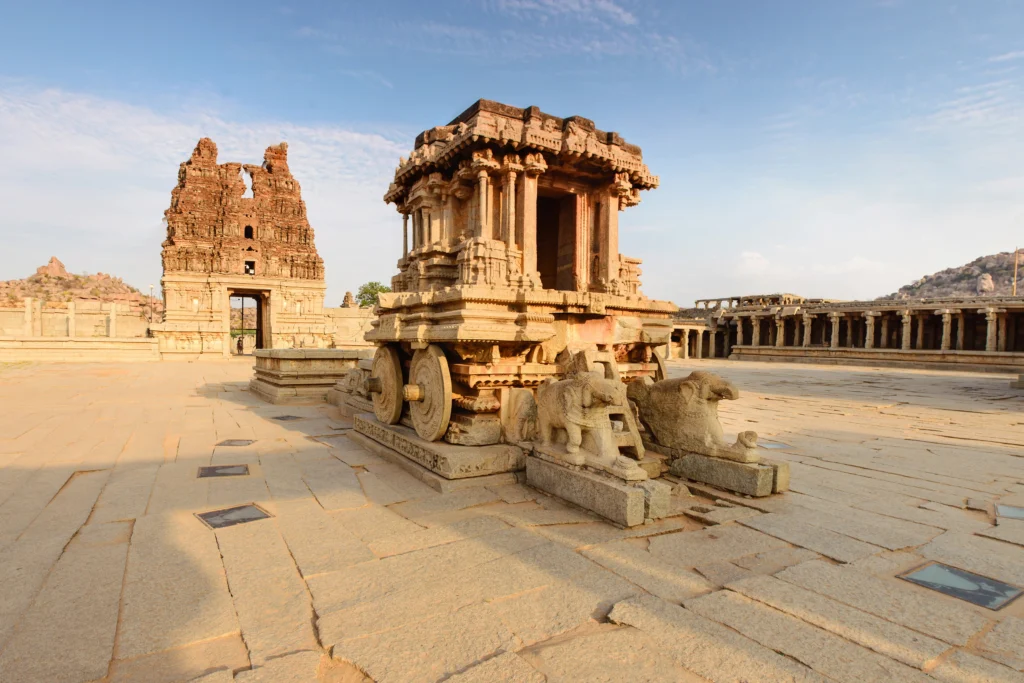
6. Group of Monuments at Hampi, Karnataka (1986)
Hampi is a UNESCO World Heritage site and is a testament to the beauty of South Indian architecture and city planning. Hampi continues to have a vast array of ruins: temples, royal palaces, markets, and even an advanced water system. With a sprawling temple complex and ruined castles, Hampi is a remarkable city of the bygone era. Hampi set the standard not only for the Vijayanagara Empire and its architecture, but also for India’s cultural legacy.
7. Fatehpur Sikri, Uttar Pradesh (1986)
Fatehpur Sikri holds an important piece of history as it served as the Mughal capital for 15 years. The Empire of Akbar built it in the late 16th century before abandoning it due to a scarce water supply. Today, it is a UNESCO World Heritage Site. As a World Heritage Site, it is an excellent example of the beautiful architecture crafted by the Mughals, as it integrates Indian, Persian, and Central Asian architectural styles. Important places in Sikri include the Jama Masjid and the Buland Gate. The entire region demonstrates the greatness of Akbar and the reign of his remarkable tolerance of all religions.
8. Manas Wildlife Sanctuary, Assam (1985)
Nestled in the foothills of the eastern Himalayas, Manas Wildlife Sanctuary is a UNESCO World Heritage Site. It is home to a wide range of unique flora and fauna. Some of the rare and endangered animals that can be spotted here include the Bengal tiger and the one-horned rhinoceros, along with the golden langur. The wetland and grassland ecosystems of the sanctuary are home to a variety of birds, such as the Bengal florican and the swamp francolin. It is an important area for the preservation of regional biodiversity and supports a growing wildlife viewing and conservation community.
9. Keoladeo National Park, Rajasthan (1985)
Keoladeo National Park, or Bharatpur Bird Sanctuary, is one of the most important sites for the conservation of birds in the world. This man-made wetland is situated in Rajasthan, where it draws in millions of migratory birds, some even as far as Siberia, Europe, and Central Asia. With over 370 species of birds and countless species of wildlife, it is a dream location for all birdwatchers and wildlife photographers. Keoladeo is also home to deer, crocodiles, and various reptiles, and is a unique habitat because of its varied flora and fauna. It was declared a UNESCO World Heritage Site because of its critical role in bird conservation.
10. Hill Forts of Rajasthan (2013)
The Hill Forts of Rajasthan is a set of six forts – Chittorgarh, Kumbhalgarh, Ranthambore, Gagron, Amber, and Jaisalmer – and is located in the hilly and rough areas of Rajasthan. For protection against enemies, hills were used to site the forts, and the Royal military Forethought planned the layout. The unique design of each fort demonstrates different methods of construction, engineering, and military strategy of the time. The forts also served other purposes, including the administration of the region and the culture of the people. The Kumbhalgarh Fort is the most famous of these, as it has the second-longest wall in the world, the first being the Great Wall of China.
Every Heritage Site across India has a unique story to tell. Collectively, they reflect India’s diverse cultures, history, and the natural beauty of the different phases of the country. Each of the constructed, natural, and religious heritage sites tells the story of the different kingdoms and empires that flourished and built the country we live in today. The heritage sites across India help connect the country’s past with the present. Every year, people from different parts of the world visit the heritage sites to witness the beauty and history in person. Thanks to the people and the organizations around, we are able to preserve our country’s heritage for the generations to come.
