

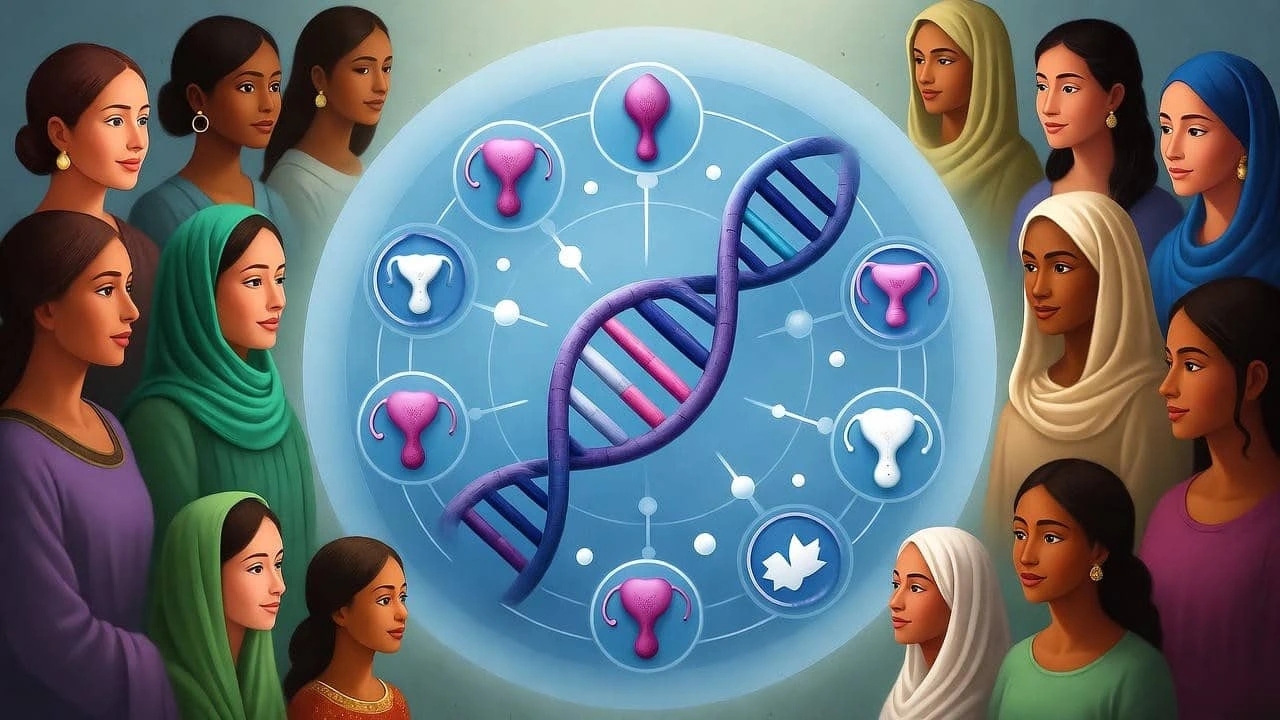
Depression is a common mental health problem that affects people’s daily functioning all over the world. Women are about twice as likely as men to suffer from depression throughout their lives. This led to the exploration of various reasons for the difference, including sociodemographic, biological, and psychiatric reasons. Among the explanations, genetics is increasingly gaining importance in answering the key question as to why depression is more common among women. There are numerous studies that detail the increased risk for women and focus on the genetics involved.
The Understanding of the Gender Gap in the Prevalence of Depression
The higher rate of depression in women is documented in multiple cultures and across all age ranges. For women, depression becomes more prevalent around the time of puberty, which is the time of significant hormonal changes, and the rate stays elevated throughout the reproductive years. While the social world is predominantly caregiving, and women are more likely to suffer from partner violence, these factors alone are insufficient to explain the difference. More likely, the cause is biological and, particularly, genetic.
Heritability estimates for major depressive disorder (MDD) indicate that genetic factors account for 40-50% of the risk. This indicates that while environmental factors are important, a significant degree of risk involves inherited characteristics. In adoption and twin studies, a stronger genetic association has been documented in instances when biological family members have the disorder, and the authors note this as supportive evidence.
Important Genetic Studies on Sex Differences
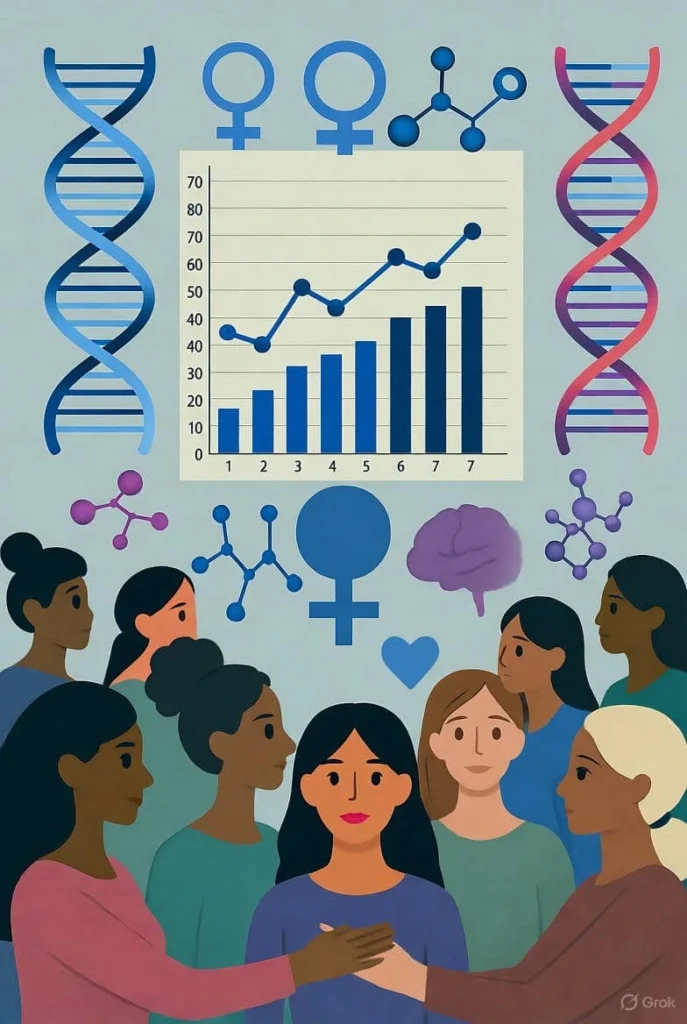
Exciting developments in genetic research point towards the first compelling evidence of the risk of depression being different for the sexes. An important study conducted in 2025 across Australia, Europe, and the USA, and involving 200,000 participants, found that women have nearly twice as many depression-related genetic markers as men. In women, 13,000 markers were identified, while in men, 7,000 were identified. This study, deemed the largest study on the subject of sex differences in major depression, compared the depression-related DNA of 130,471 women and 64,805 men versus control participants without the disorder.
The results show that although there are 7,000 genetic variants common to all sexes, there are also 6,000 that are exclusively female. Such variants are likely to explain some of the genetic burden that women carry and their increased susceptibility. It has also been suggested that men may need to accumulate these risk factors to a greater degree, thus implying a higher resilience threshold to depression.
This has also been seen in the past. For example, whole exome sequencing studies have identified depression risk variants in women associated with the later genes PDE4A, FDX1L, and MYO15B, as well as the mitochondrial functions served by men. Each of these genes is involved in aspects of cellular signalling and also mitochondrial functions, whereby sex may channel the influence over mood.
Specific Genes and Their Role in Gender-Specific Risk
There are some depression-associated genes that have sex differences. For instance, the 5HT2A serotonin receptor gene and the TPH gene have been associated with depression more in females. These genes are part of the serotonin pathway, which functions to stabilise mood. Conversely, a much greater impact on depression risk in males stems from the COMT gene, which is associated with the dopamine-degrading gene.
In addition, the interplay of genes and hormones is thought to increase the risk for females. During puberty, menstruation, and the reproductive cycle, as well as through the menopause transition, dramatic hormonal changes have been associated with greater depressive episodes. Heightened genetic sensitivity may worsen these effects. Depression-related genetics and some metabolic characteristics, particularly in women, including body mass index (BMI), further underscore the association.
The Impact of Gene-Environment Interactions
Even genetic tendencies have to be modified, and in specified ways for boys and girls, for an added environmental factor. Gene-environment interactions have shown, through behavioural genetics, that depression increases differently for men and women. Stressful life events, together with certain genetic indicators in women, as described in the diathesis-stress model, may lead to considerable sensitivity as the predictor. Within this model, those with “risk” alleles encounter more severe negative environments.
Conversely, there are “plasticity” genes that, in adverse conditions, produce worse results, while in positive conditions, improve adaptation. Greater sensitivity in women, as all of these are plasticity genes. The interactions described underscore why life experience has to be integrated with genetic evidence, particularly when trying to understand the gender gap.
Expanded approaches to treatment considering future directions.
More in-depth studies of the genetics of depression are likely to lead to more individualised depression treatment. For instance, the development of sex specific depression treatment, targeted medications, and treatments focused on risk factors correlated to depression. For example, addressing therapy and treatment development to specific female depression variants and hormones or female-specific metabolic disorders.
More variants are likely to be uncovered in future studies, and more of the variants’ functional implications will be uncovered. More targeted intervention to improve depression outcomes will likely include a combination of depression genetics, depression and depression treatments, and other available treatments within the environment. These findings will improve harm and risk reduction strategies targeted for women.
In brief, genetic factors offer another perspective to analyse the relatively higher risk of developing depression that women face. Although there are some common factors, the greater number of female-specific genetic variants and the greater number of potential female-specific genetic/environmental interactions suggest that the case may be more complex. To apply these findings, some actions may be helpful, which may be the result of the combined findings of this and other studies. Individuals should discuss their family history of depression with healthcare providers to evaluate personal risk and consider the potential value of genetic risk assessment.
Presumably, attenuating the expression of genetic risk may be possible with the development of strong social support and the maintenance of such support during stress. Incorporating more physical activity along with a healthful diet that is lower in sugar, stress reduction practices, and meditation are suggested for risk reduction and strengthening resilience. Screening for depressive symptoms, especially during high-risk times such as the postpartum period and around menopause, should be a priority, along with seeking help and evidence-based treatment such as cognitive behavioural therapy, especially with internet-based options. Risking further problems by using illicit drugs and alcohol should be avoided, and engaging in research and learning about new personalised treatment options should be encouraged.
